What Are You?
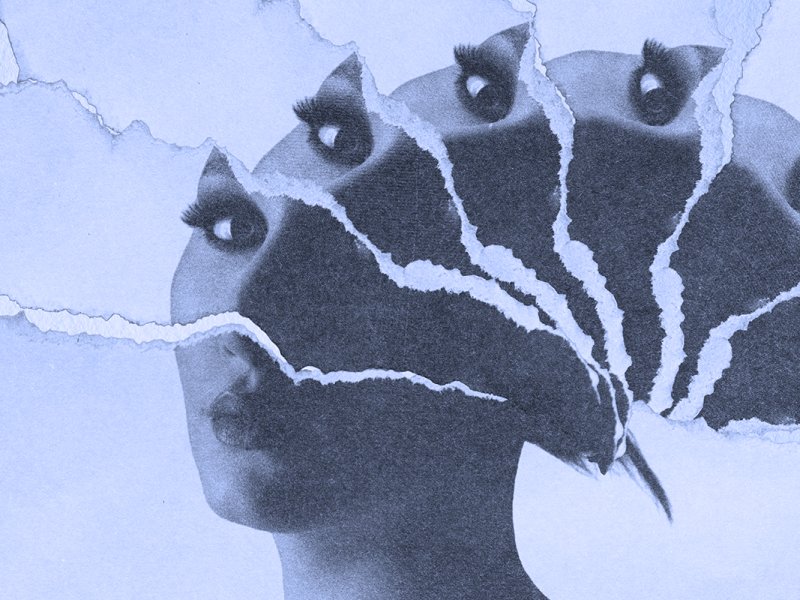
What are you? This isn’t the first time in my career I’ve heard this, and I imagine it won’t be the last. I’ve had a…different…design career than maybe a lot of other designers. I didn’t go to D-school; I have a degree in linguistics. I started my career in the before times as a front-end web developer. I got into that field because my first job was as an advertising copywriter. I did not enjoy the copywriting so much, but I really loved FE development. From there, I branched out into information architecture, IxD, task flows, system architecture interaction models, etc. I like defining systems, how things relate, and how they work.
So here’s the big confession: I detest making wireframes. I mean, I have always hated that part. It isn’t so much that I don’t sketch out what things need to be where in order for people to be able to do what they want to do; it’s that I don’t like the process of making a high-fidelity representation of a thing to give to someone else and then cross my fingers and hope for the best. I don’t think that serves anyone. Therefore, I have spent a lot of time trying to learn how to build the things I envision, and learning how to work with the people who can build what I can’t.
And therein lies the problem. What am I?
I’m good at what I do, but I am a terrible professional searcher of work – contracts, permanent, or otherwise. My resume likely leaves people more confused about who I am rather than providing clarity. I realize this.
So for a fun experiment, I asked an LLM to reflect back to me what it thought people who saw my resume and portfolio might be thinking. Do I take the feedback as an iron-clad verdict on peoples’ impressions? No. But I thought the exercise was helpful.
LLM’s Impressions
This is the response I received to the prompt: Take my résumé and construct a hypothetical design leader’s mental model of me after reading it.
- This is a very experienced, unusually technical designer who has moved beyond conventional UX into systems architecture and AI. She is probably extremely strong at complex problems. I need to figure out what she actually wants, how she works with people, and whether she will fit into the kind of design team we have.
- What exactly is she now?
- She’s probably very smart, but is she going to be too cerebral?
- She isn’t really a conventional UX designer. But does she still want to be a designer?
- She may be ahead of where our organization is. Will our product/design organization be intellectually stimulating enough for her?
- She probably has very strong opinions. How receptive is she when somebody disagrees with her?
- She might be more comfortable with engineers than designers. Is she going to be frustrated by designers who aren’t technical?
- She has probably been doing this longer than I have.
- She is unusually independent. Why does she want to work for us? And there are things I specifically want other people around me for.
- She might not tolerate bullshit. Your résumé is unusually low on corporate fluff.
- She’s probably more interested in difficult problems than beautiful interfaces. You may be attracted to the underlying problem, while a lot of design culture is attracted to the practice of design itself.
- What does Misty actually want to do?
The final verdict: Your résumé establishes competence much more strongly than it establishes motivation or interpersonal style.
The response wasn’t necessarily flattering, but it wasn’t necessarily damning, either. It was close to how I see myself. I asked a couple of other people, and the reactions were varied. But humans don’t like to say bad things about people they care about, so…
Some of these points are just problems everyone deals with. Some people have been doing your job much, much longer than you have, while other people are very new. I don’t care about that, because everyone has something to teach me. But perspectives vary.
Other points are inherent to my personality. I doubt I could change them if I wanted to. I am on the more independent side of the spectrum and tend to be very direct. Not in a rude way; not intentionally, anyway.
The helpful questions were about motivation. What do I want to do? Am I still a designer in a way that is legible in 2026? Am I a designer at all? I don’t have answers to any of these questions. I like designing and building things. I like figuring out how humans should interact with increasingly complex information systems, and how automation works within those interactions. Those don’t map to a title like “product designer.”
This didn’t lead to any great epiphanies, and I don’t have advice on how to decide which box you fit into. I don’t think I fit into just one, and maybe you don’t have to, either.